
Have you recently found yourself scrolling through your social media feeds only to be bombarded with chatter related to the rise of AI and more specifically ChatGPT?
On platforms like LinkedIn, even copywriters are fretting about the potential loss of the “human touch” in content creation thanks to the rise of these technologies. It’s a legitimate concern that’s got many people worried.
But let’s take a step back and consider a different perspective. What if we looked at these technological advancements as an opportunity for collaboration rather than a career-ending threat?
AI is developing and moving faster than ever before
AI is rapidly advancing, and it can be hard to keep up with all the new developments and opinions. OpenAI’s ChatGPT, Microsoft Bing’s Chat, and Google Bard are just a few of the programmes shaping the world of AI. While some fear that these tools will replace human touch in the workplace, we at Kineo believe that they can complement our working practices.
As an elearning company, we prioritise the learner’s needs and are open to embracing new technology if it helps us better meet those needs. The impact of ChatGPT and similar tech on L&D teams and learning experiences is a big question, and the conversation is constantly evolving.
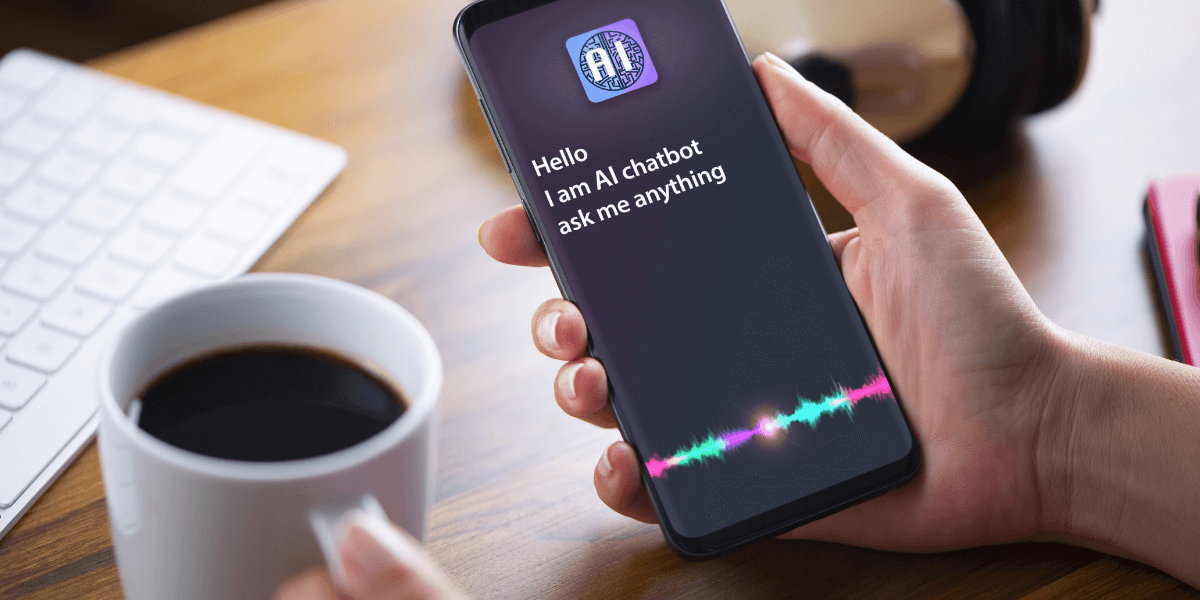
The 90s were marked by the widespread adoption of the internet, which revolutionised the way we access and share information. The 2000s were characterised by the advent of cell phones, which transformed how we communicate and stay connected with each other. The 2010s saw the rise of the smartphone, which brought the power of the internet and mobile communication to our fingertips, and changed the way we live, work, and play.
Now, as we reach the mid-2020s, we believe that AI will be the next transformative innovation that will revolutionise the way we interact with the world. From virtual assistants and chatbots to self-driving cars and smart homes, AI has the potential to radically transform our lives, making them more convenient, efficient, and enjoyable. Not only are we excited to see what the future holds, we’re here to help shape that future!
Let’s explore: can ChatGPT positively impact our daily lives and learning experiences?
We spoke with a range of our learning design team and rounded up their thoughts, experiences and opinions on the of-the-moment ChatGPT debate.
Can ChatGPT help shorten some of the more time-consuming and less technical tasks?
“I can see how it could be useful for often time consuming but relatively straightforward tasks, such as editing a dictated transcript. Word doesn’t put dictated text into sentences, so it takes a while to complete manually. Something like ChatGPT can easily edit it into sentences taking a 20 min job to a 10-second job. Those little annoying writing/editing tasks could be transformed”

Can ChatGPT help ‘ignite’ new writing styles?
“I’ve had a play around with ChatGPT when writing, to quickly help me find another way of saying something – it’s easier to use than a thesaurus or to try out different styles of writing – e.g., descriptive or simple. I needed to edit whatever it came up with, but it got me writing quicker and sparked new ideas.”
“I also used it to rewrite some dry content by telling it to ‘rewrite in conversational language, using ‘you will’ sentences’. Worked a dream. I had to do some creative editing, but it was a great start.”
Can ChatGPT write assessments?
“I used it to help me design more effective knowledge checks by suggesting different types of questions and providing feedback on the clarity and effectiveness of my questions.”

Are there examples where big brands have adopted this technology?
A recent article from the Guardian explains how ChatGPT is being used for power language learning in Duo Lingo. This is exciting as it shows us that ChatGPT can support learners with more complex learning needs like language learning.
The article describes:
“A new subscription tier of the language learning app Duolingo, Duolingo Max, will now offer English-speaking users AI-powered conversations in French or Spanish, and can use GPT-4 to explain the mistakes language learners have made. Being able to point out where learners make mistakes is key to learning – using AI to provide this scaffolding is incredibly powerful.”
There are many other stories out there with powerful examples of how embracing ChatGPT has transformed customers’ lives. For example, Morgan Stanley recently announced they are using it to support financial advisers in finding content. It’s clear to see how this relates to learning. It could very easily help learners curate content or it could be used as an effective performance support tool.

However, there are concerns about bias or even the use of oppressive language
AI software like ChatGPT scrapes data from the whole of the internet – which means a lot of incorrect and biased information can also be picked up. You could argue that this could be solved if you point the system to your company’s compliance policy or social media guidelines. You’d hope that the technology would develop to cater for these scenarios. However, this is a concern and something to be aware of at this moment in time. Arguably there will always be a place for a human editor to check and finalise the information.
There is a lot of information out there about this at the moment and it can be tricky to navigate. We’ve devoted extensive effort towards consuming available information on it and recommend a few pieces we’ve recently found interesting:
- Understanding Chat-GPT, And Why It’s Even Bigger Than You Think by Josh Bersin (Josh Bersin.com)
- AI-Powered Learning Design by Dr Philippa Hardman (Substack)
- My week with ChatGPT: can it make me a healthier, happier, more productive person? By Alex Hern (Guardian)
- Harnessing Chat GPT and generative AI in the workplace: rewards and risks by David Mills (Business Weekly)
Josh says:
“Imagine the hundreds of applications in business: recruiting, onboarding, sales training, manufacturing training, compliance training, leadership development, even personal and professional coaching. If you focus the AI on a trusted domain of content (most companies have oodles of this), it can solve the “expertise delivery” problem at scale.”
However, David argues:
“Another major problem is that because it interacts with and learns from the questions its users submit, its use in a business context can lead to leakage of confidential information.”
It’s clear that however we approach this, we need to approach it with caution and pragmatism.
Conclusion
We certainly don’t have all the answers. We don’t know right now if tools like ChatGPT will prove to be helpful or provide more challenges than they’re worth. However, we do think we should feel hopeful for the future.
At one point in time, mechanisms like text autocorrect felt too much but we’ve absorbed mechanisms like this into our lives and we wouldn’t be without them. The AI revolution is going to happen whether we’re onboard or not, so perhaps it’s time to be open to the benefits and see the positives before things really start to change?
We believe:
- The human touch is always going to be required.
- These tools aren’t the only solution, but they can be supportive of our work.
- We need to point these tools to credible and relevant sources to save incorrect or biased info being included.
- We should be open-minded to this technology improving our lives rather than it replacing us.
- As L&D professionals we can’t ignore these developments and we must keep learning and being open to changes.
What are your thoughts? We’d love to hear from you!